Hundreds of near-perfect stone balls were carved by hand in southern Costa Rica over 1,000 years ago. Nobody knows exactly why. Visit green places on the map, dig up a sphere every day, hatch it and build your collection.
Each Digital Collectible is one of a kind and recorded on the Divi blockchain, so it really belongs to you and can’t be copied. Pizote, our AI guide, helps you hatch, collect, forge and trade.
Free to play for all ages. Buying and trading need a parent or adult account.
1 / 7
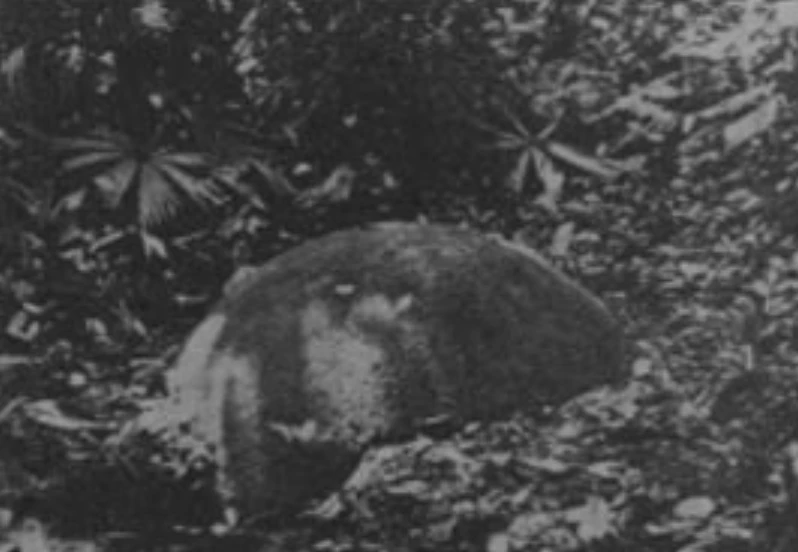
A large sphere on Farm 7, before it was dug out. Photo: Thomas Dunn, in Doris Stone’s report, American Antiquity, 1943 (public domain).
1930s
Found in the jungle
In the 1930s, workers clearing jungle for the United Fruit Company’s banana plantations near Palmar Sur, in Costa Rica’s Diquís Delta, kept hitting something hard: big, round stones, half buried in the forest floor. More turned up across the delta and even on Isla del Caño, an island off the Osa Peninsula. Today more than 300 are known.
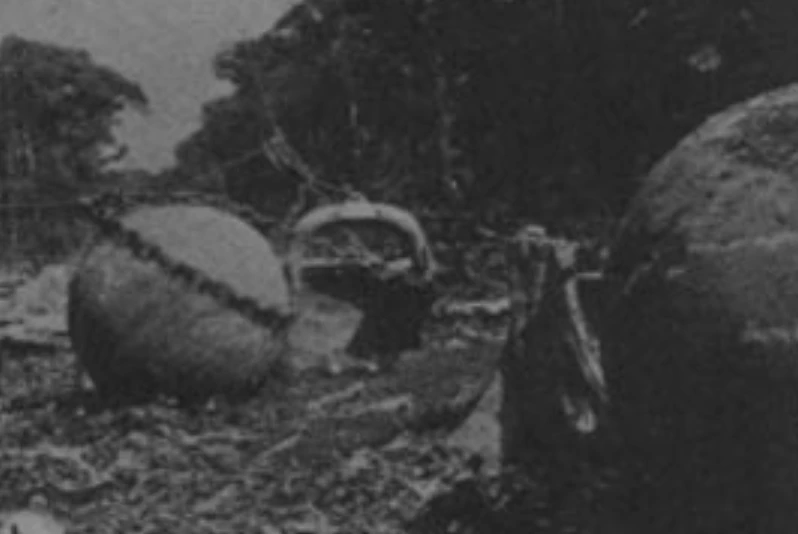
Big spheres being hauled out of an irrigation ditch on Farm 7. Photo: Thomas Dunn, in Doris Stone’s report, American Antiquity, 1943 (public domain).
Treasure hunters
Bulldozers and dynamite
Rumours spread that the spheres had gold inside. Some were drilled, packed with dynamite and blown apart. No gold was ever found. Others were dragged off with bulldozers and chains to decorate gardens and offices around the country. In 2014 four ancient village sites with spheres became a UNESCO World Heritage Site, and the spheres became a national symbol of Costa Rica.
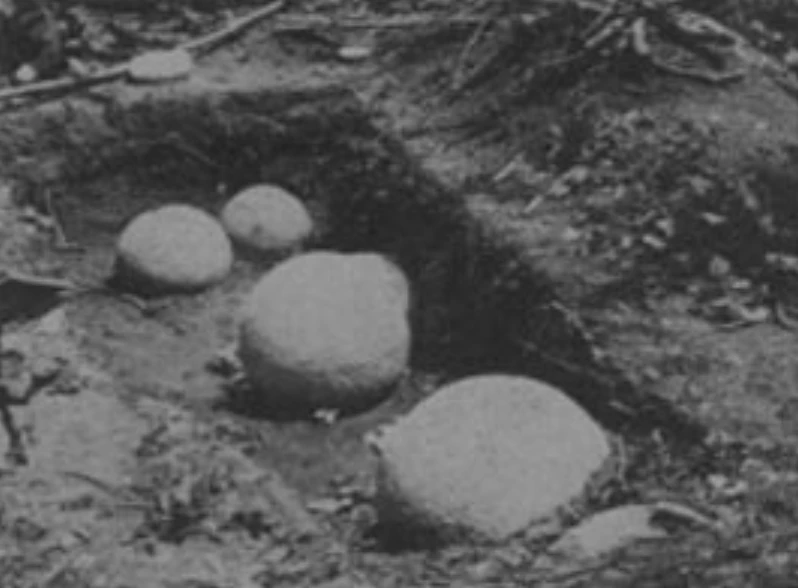
Spheres in front of a mound on Farm 5. Photo: Thomas Dunn, in Doris Stone’s report, American Antiquity, 1943 (public domain).
1943
The first scientists
Doris Stone, an archaeologist whose father was a United Fruit executive, published the first study of the spheres in 1943, with these photos. Harvard’s Samuel Lothrop came next and mapped dozens more. Some sat in straight lines and curves near mounds where important houses once stood. Sadly, most had already been moved before anyone could record where they first lay.
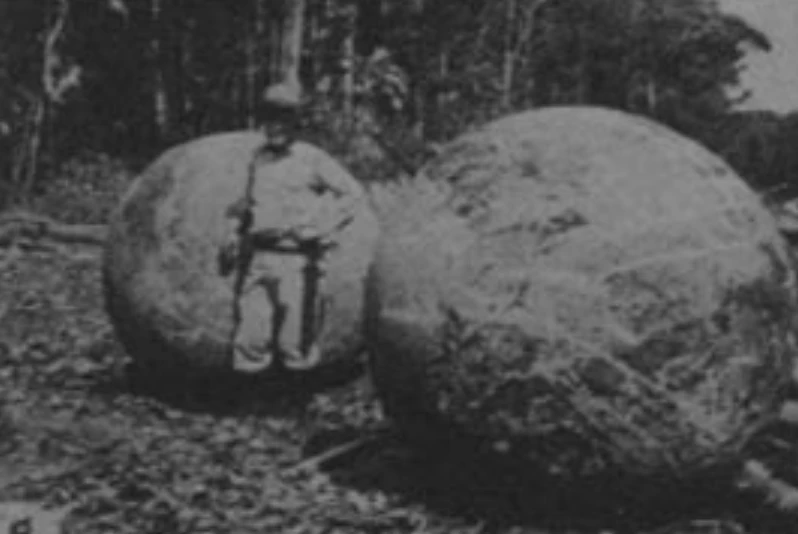
A “pair of smaller balls” on Farm 7. Photo: Thomas Dunn, in Doris Stone’s report, American Antiquity, 1943 (public domain).
Sizes
From marbles to monsters
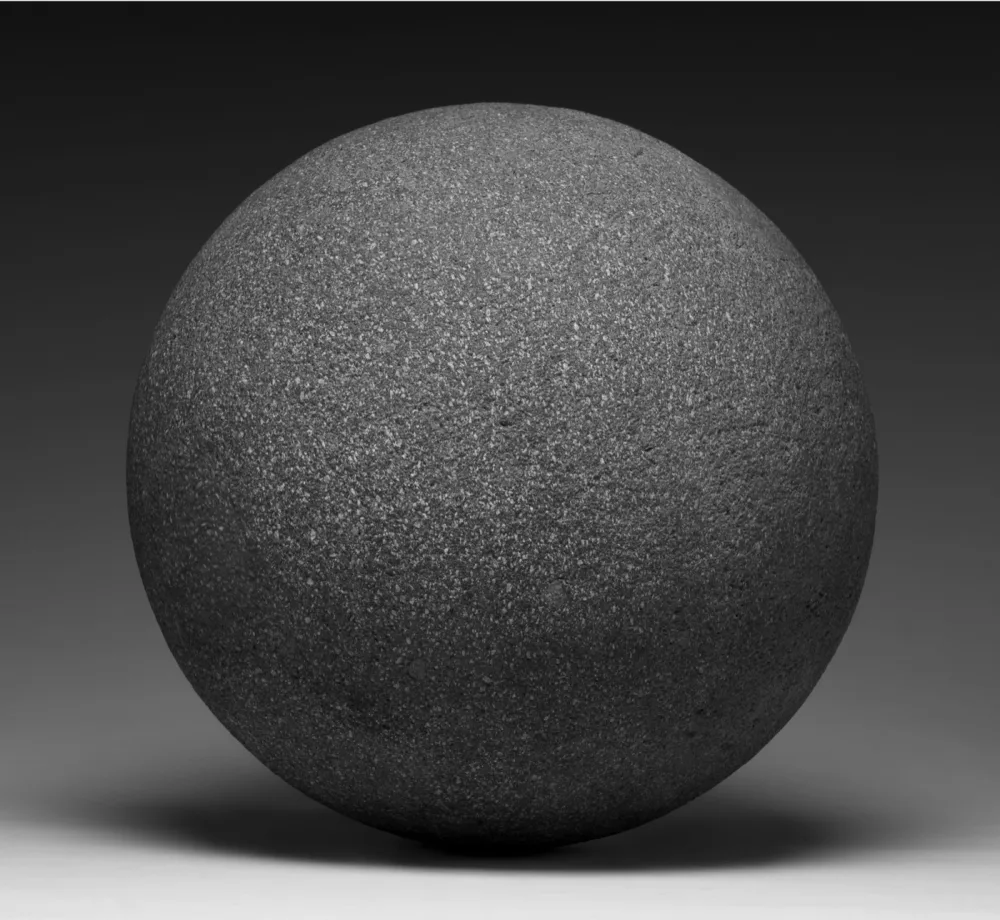
The smallest are just a few centimetres across, small enough to hold in your hand. The biggest is 2.66 metres (8.7 feet) across and weighs around 15 tons. The man in this photo is standing in front of what the 1943 report called a “pair of smaller balls”. Most are carved from gabbro, a very hard rock, and a few from limestone or sandstone.
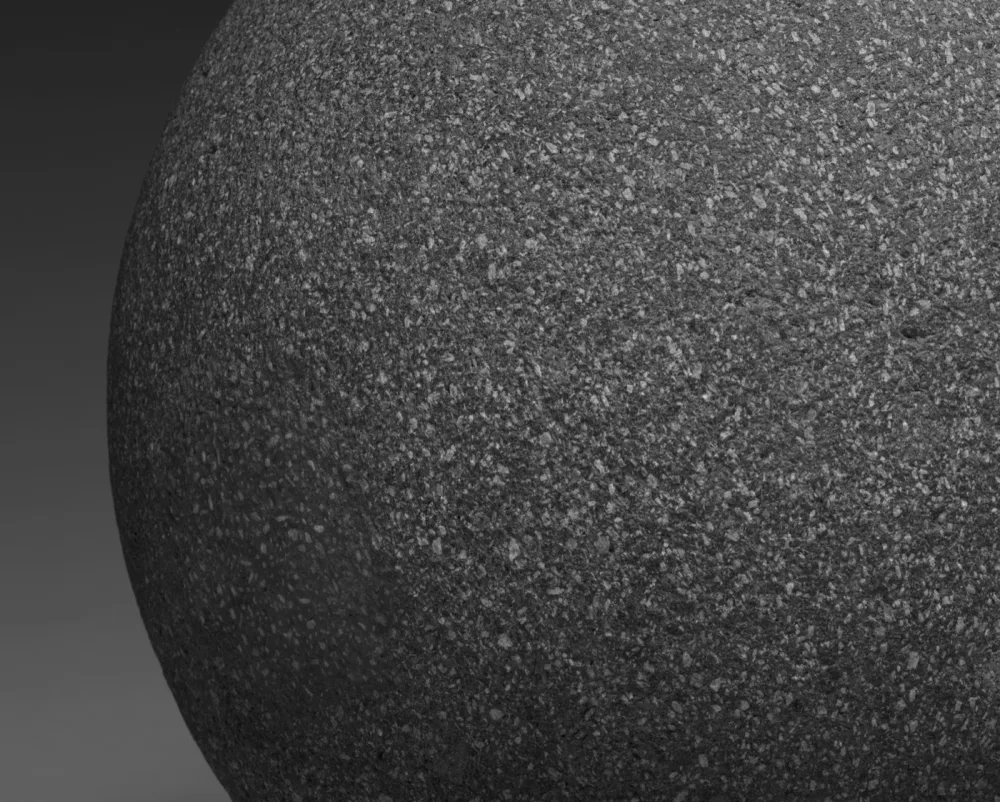
The pecked and polished surface of a Diquís sphere, 800 to 1550 AD. The Metropolitan Museum of Art, New York (public domain).
How and when
Made by hand
The makers had no metal tools. Archaeologists think they shaped boulders by heating them with fire and splashing on cold water to crack the surface, then pecked them with harder stones and polished them with sand. The rock came from hills kilometres away, where unfinished spheres still lie. Most were made between about 600 and 1500 AD, long before the Spanish arrived.
A Diquís sphere, 67 cm across, 800 to 1550 AD. The Metropolitan Museum of Art, New York (public domain).
The theories
So what were they for?
Some archaeologists think they lined the way to a chief’s house, as signs of power. Others think they copy the sun and the moon, or point at the sky. In a Bribri legend, they’re cannonballs fired by Tara, the god of thunder. Some people even blame Atlantis or aliens, though archaeologists don’t. The people who made them left no writing to explain them.
?????????
The mystery
Why do YOU think they were made?
Hundreds of years later, nobody knows for sure. Signs of power? A map of the sky? A message we haven’t learned to read? Maybe the answer is still buried somewhere in the Diquís Delta, waiting to be dug up.